Home

250 Years of America’s Revolutionary Stories

Events

All events
All events

Explore

All properties
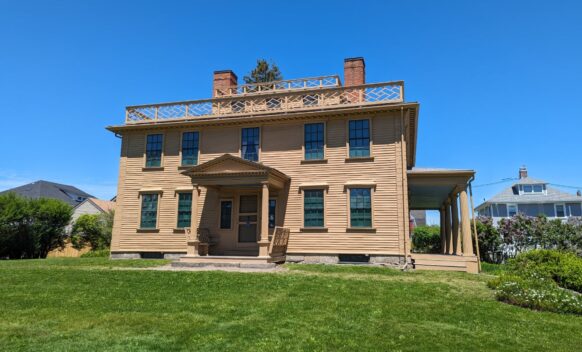
An external photo of Quincy House showing the front of the house and the green front lawn.
Quincy House
Quincy, MA
This country estate overlooking Quincy Bay transports you to the eve of the American Revolution era and tells the story of a woman’s work to preserve her family’s history more than one hundred years later.
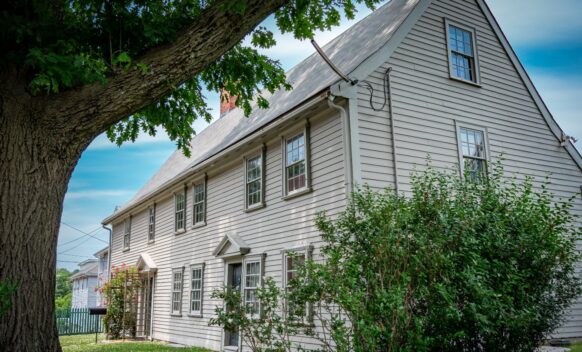
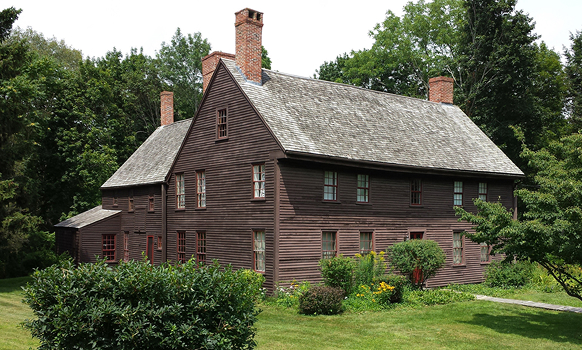
An exterior photo of pierce house showing the side and front of the house. There is a tree and bushes visible.
Pierce House
Dorchester, MA
Pierce House is one of the last surviving examples of seventeenth-century architecture in the city of Boston. During the American Revolution, Col. Samuel Pierce participated in the fortification of Dorchester Heights. His remarkable personal papers and diaries allow us to explore everyday life during the war. Pierce was “a regular guy”—a middle-class farmer, not a politician or general or wealthy merchant. His journal entries offer visitors an eyewitness account of how events such as the Boston Tea Party and the Battles of Lexington and Concord were perceived by those living nearby and how the unrest and eventual war interrupted and shaped daily life.
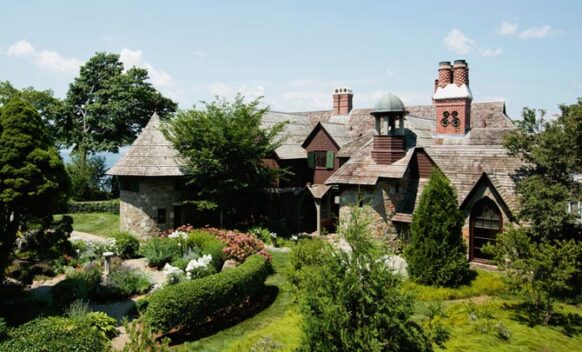
An exterior photo of Beauport, the Sleeper-McCann House
Beauport, the Sleeper-McCann House
Gloucester, MA
Beauport, the Sleeper-McCann House, a National Historic Landmark, was the summer home of one of America’s first professional interior designers, Henry Davis Sleeper. Perched on a rock ledge overlooking Gloucester Harbor, Beauport was Sleeper’s retreat, backdrop for entertaining, and professional showcase, and an inspiration to all who visited.
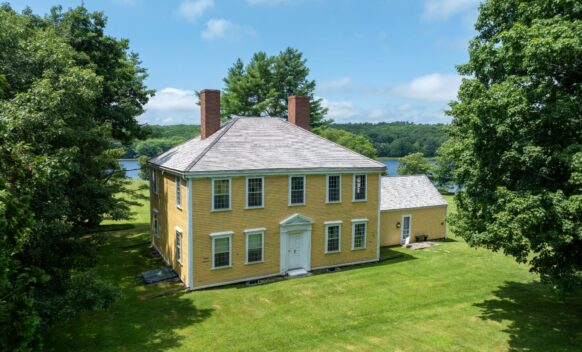
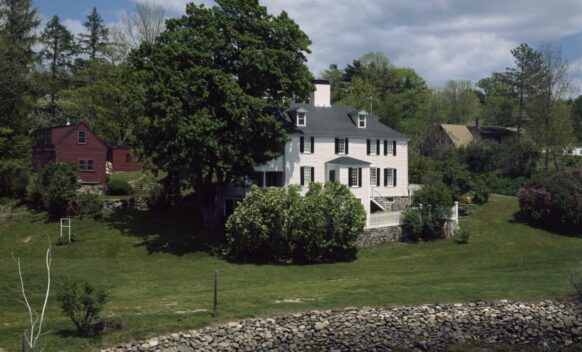
An aerial view of the front of Bowman House. Water is visible in the background.
Bowman House
Dresden, ME
Framed by dense woods and set in rolling hills overlooking a pristine section of the Kennebec River, the 1762 home built by Jonathan Bowman is a rare survivor of domestic eighteenth-century elegance in a rural setting.
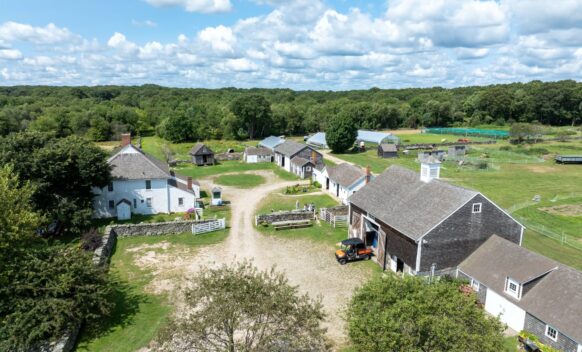
An aerial view of Casey Farm including the main home, barns, and fields.
Casey Farm
Saunderstown, RI
Located by the bay on the ancestral homeland of the Narragansett People, Casey Farm once produced food for local and coastal markets and was one of many plantations tied to slavery.
Coffin House
Newbury, MA
Coffin House, occupied by the Coffin family over three centuries, reveals insights into domestic life in rural New England. The house, which contains the family furnishings, began as a simple dwelling built in the post-medieval style.
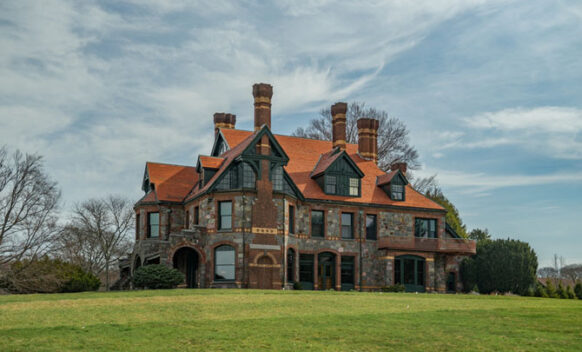
An exterior photo of Eustis Estate as seen across a lush green lawn.
Eustis Estate
Milton, MA
Explore a rare surviving example of late nineteenth-century architecture and design. Designed by renowned Boston architect W. Ralph Emerson and built in 1878, the Eustis Estate sits on eighty acres of picturesque landscape at the base of the Blue Hills.
A photo of the front of Gilman-Garrison House.
Gilman Garrison House
Exeter, NH
Information coming soon!
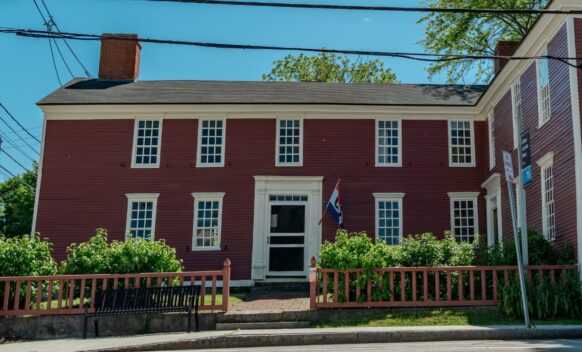
An exterior photo of Langdon House.
Langdon House
Portsmouth, NH
A National Historic Landmark, Langdon House is an exceptional Georgian mansion which George Washington “esteemed the first” in Portsmouth. Its reception rooms are of a grand scale suited to ceremonial occasions and are ornamented by elaborate wood carving in the Rococo style. John Langdon was a merchant and shipbuilder.
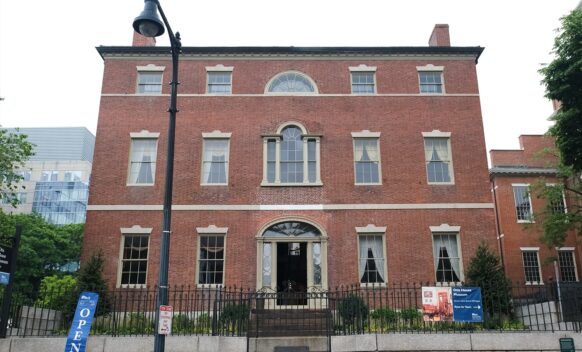
A photo of the exterior of Otis House.
Otis House
Boston, MA
Otis House tells the story of domestic life in post-Revolution Boston. Harrison Gray Otis and Sally Foster Otis were children in 1776, but their families were deeply entrenched in the war, well-known patriots Mercy Otis Warren James Otis, Jr. included.
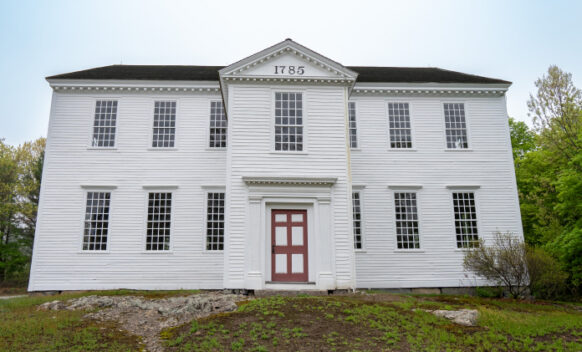
A photo of the exterior of Rocky Mountain Meeting House.
Rocky Hill Meeting House
Amesbury, MA
Rocky Hill Meeting House is one of the best preserved examples of an original eighteenth-century meeting house interior. The fact that it has served no active congregation since the mid-nineteenth century led to its remarkable state of preservation. Eighteenth-century hardware remains intact throughout the building.
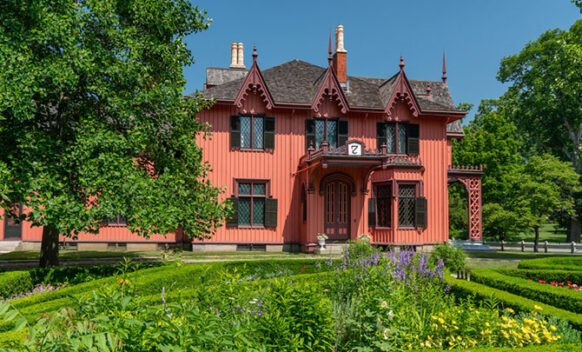
A photo of Roseland Cottage
Roseland Cottage
Woodstock, CT
Built in 1846 in the newly fashionable Gothic Revival style, Roseland Cottage was the summer home of Henry and Lucy Bowen and their young family.
An aerial photo of the back exterior of Sayward-Wheeler House in York Harbor, Maine. A rocky shore and water are visible.
Sayward-Wheeler House
York Harbor, ME
At Sayward-Wheeler House, overlooking the York River, free and enslaved people lived in close proximity as the dramatic events of the American Revolution unfolded around them.
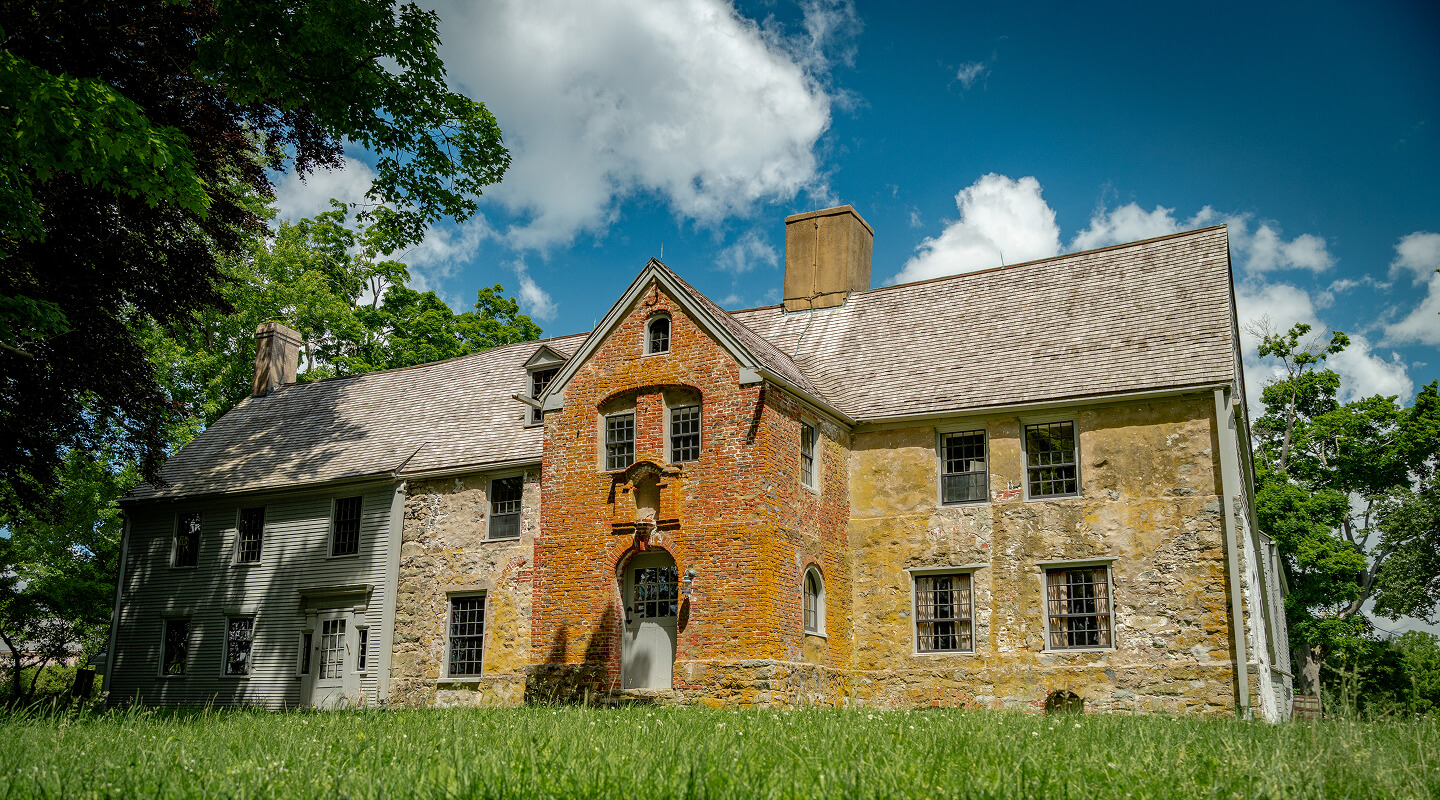
A photo of the exterior of Spencer-Peirce-Little Farm.
Spencer-Peirce-Little Farm
Newbury, MA
The 230-acre site includes a 1690 manor house that served as the country seat of wealthy Newburyport merchants.
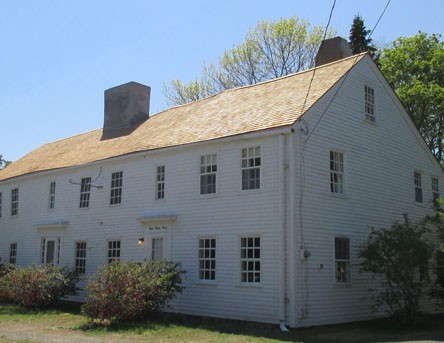
A photo of the exterior of Swett-Ilsley House
Swett-Ilsley House
Newbury, MA
In 1911 Swett-Ilsley House became the first property acquired by Historic New England, just a year after our founding. The original portion, built in 1670 by Stephen Swett, was one room deep, and later additions more than doubled the size of the house.
All properties

Myth and Memory

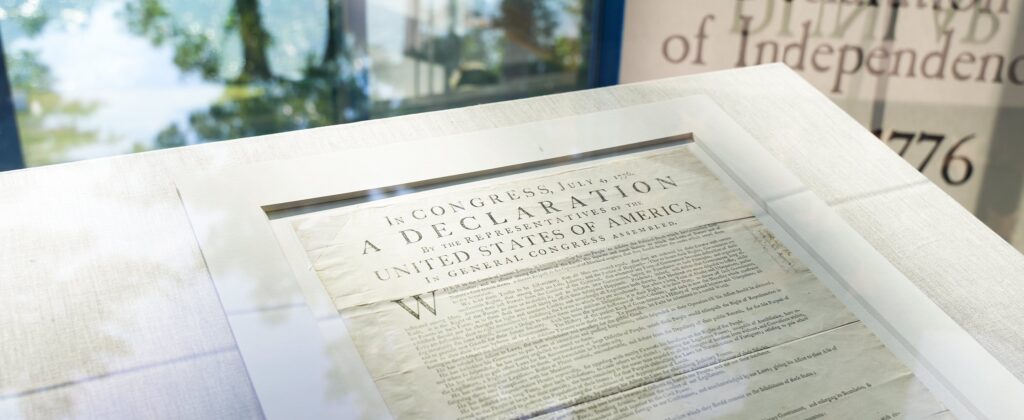
Myth and Memory: Stories of the American Revolution brings history to life through the objects and archives of Historic New England, offering a dynamic exploration of the American Revolution’s complexities as they unfolded in New England.

This immersive exhibition reveals the personal stories of individuals—young and old, patriot and loyalist, enslaved and free—whose lives were shaped by war and its lasting impact. By examining these artifacts and the myths that have grown around them, Myth and Memory invites visitors to reflect on how we remember the Revolution and grapple with its enduring legacy.

Teapot, Boston, 1750-70. Gift of Miss S. E. Kimball through the Bostonian Society
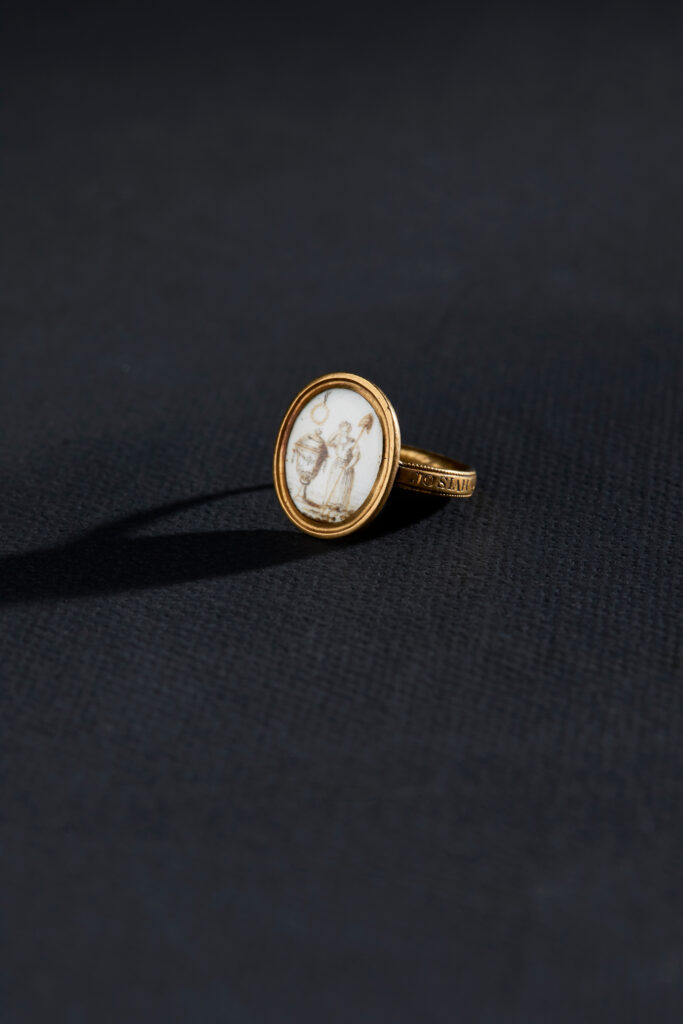
Memorial Ring, Massachusetts, 1775. Gift of Edmund Quincy
Teapot, Boston, 1750-70. Gift of Miss S. E. Kimball through the Bostonian Society

Myth and Memory: Stories of the American Revolution brings history to life through the objects and archives of Historic New England, offering a dynamic exploration of the American Revolution’s complexities as they unfolded in New England.

This immersive exhibition reveals the personal stories of individuals—young and old, patriot and loyalist, enslaved and free—whose lives were shaped by war and its lasting impact. By examining these artifacts and the myths that have grown around them, Myth and Memory invites visitors to reflect on how we remember the Revolution and grapple with its enduring legacy.

Stay in the Loop Donate
Memorial Ring, Massachusetts, 1775. Gift of Edmund Quincy

Revolutionary Ideas

View Blog
View Blog